
DTG vs DTF: what it means for your shirts
DTG prints onto the garment. DTF prints to film, then transfers to the tee. Compare the tradeoffs and see why Toolbox POD uses DTF for every shirt.

On this page
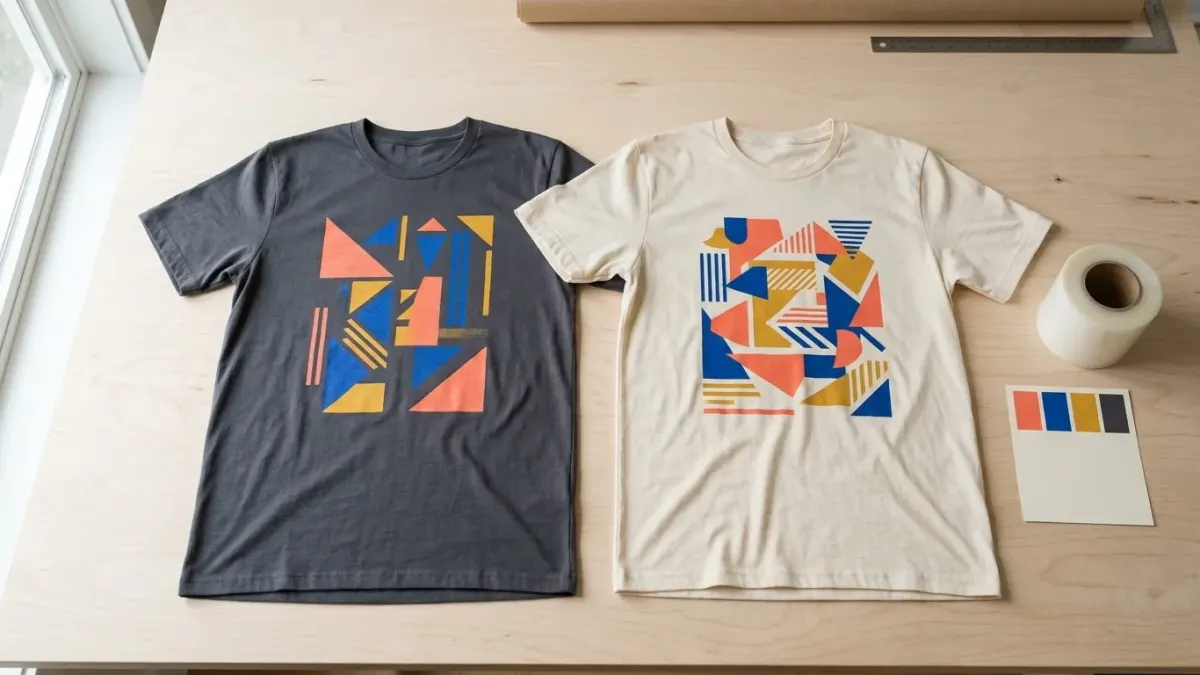
DTG and DTF both put full-color art on a shirt, but they get there differently. DTG prints ink onto the garment. DTF prints onto a film first, then transfers that print to the shirt. If you are ordering custom tees, the better choice comes down to the fabric, the artwork, and how you want the print to feel in the hand.
Short answer
DTG is often chosen for a soft print on cotton. DTF is the more flexible option for bright art, fine detail, and a wider mix of fabric colors and blends. Toolbox POD prints every shirt with DTF because it gives us dependable color on the two tees we carry, from one shirt to a larger order.
DTG and DTF are different print paths
DTG means direct to garment. The printer lays ink directly onto the shirt, then the print is cured. It is a garment-first process. The shirt matters a lot, especially its fiber content, color, and surface.
DTGdirect to garment
A print method that applies ink straight onto a garment. It is commonly used for detailed artwork on cotton and cotton-rich shirts.
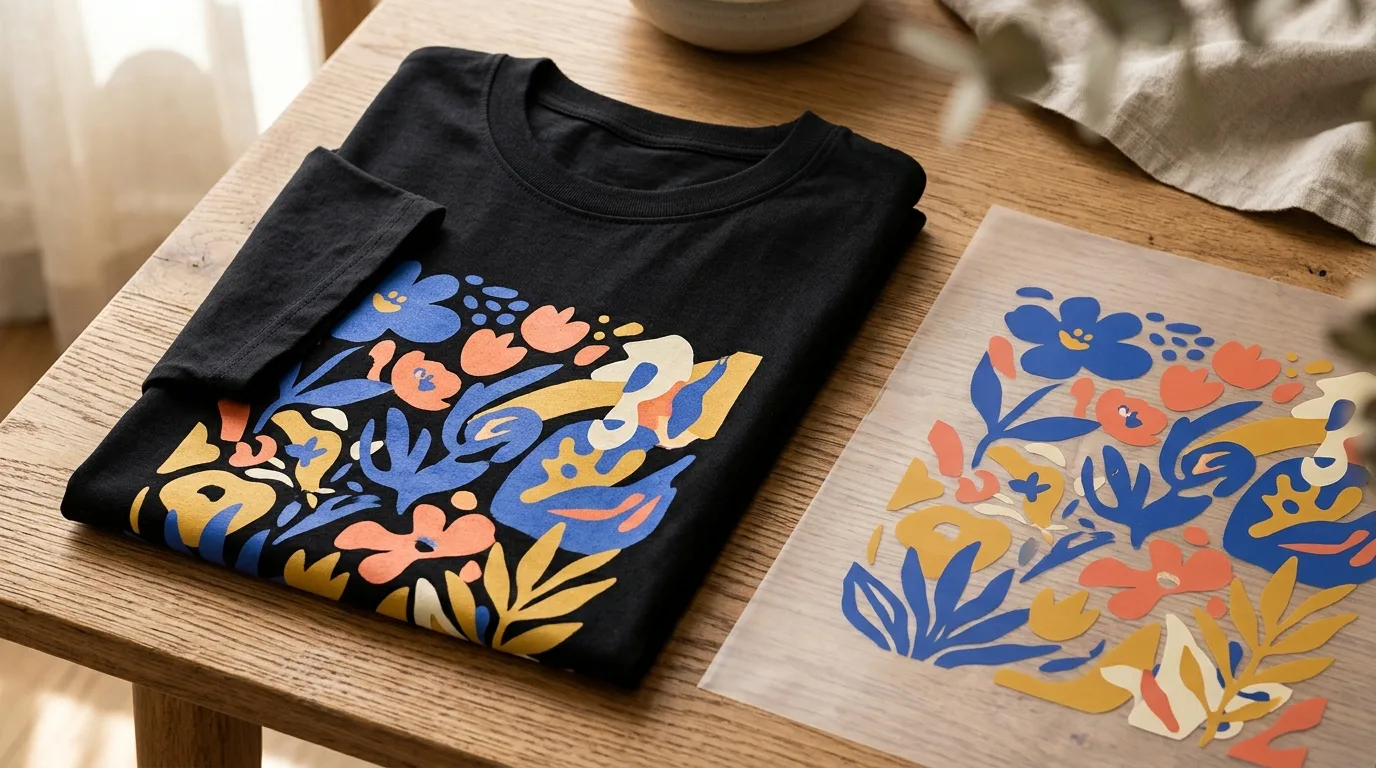
DTF means direct to film. The artwork is printed onto a coated film, covered with adhesive powder, cured, then pressed onto the garment. That extra transfer step is why DTF can move the same design onto more than one fabric type without changing the artwork file.
DTFdirect to film
A print method that creates the design on a transfer film before heat-pressing it onto the finished shirt.
| DTG | DTF | |
|---|---|---|
| Where the image starts | Directly on the garment | On a transfer film |
| Fabric fit | Usually strongest on cotton-rich garments | Works across more fabric blends and colors |
| Print feel | Often softer on the right cotton shirt | Usually has a slightly more noticeable transfer layer |
| Fine, bright art | Can work well with the right garment and prep | Strong choice for crisp detail and solid color |
| What Toolbox POD uses | Not our production method | Every shirt we print |
Why fabric changes the answer
A design does not live on a spreadsheet. It has to sit well on the actual blank. A soft, pale cotton tee and a dark blend do not behave the same way under ink and heat. That is why “which method is better?” is the wrong question without a shirt in mind.
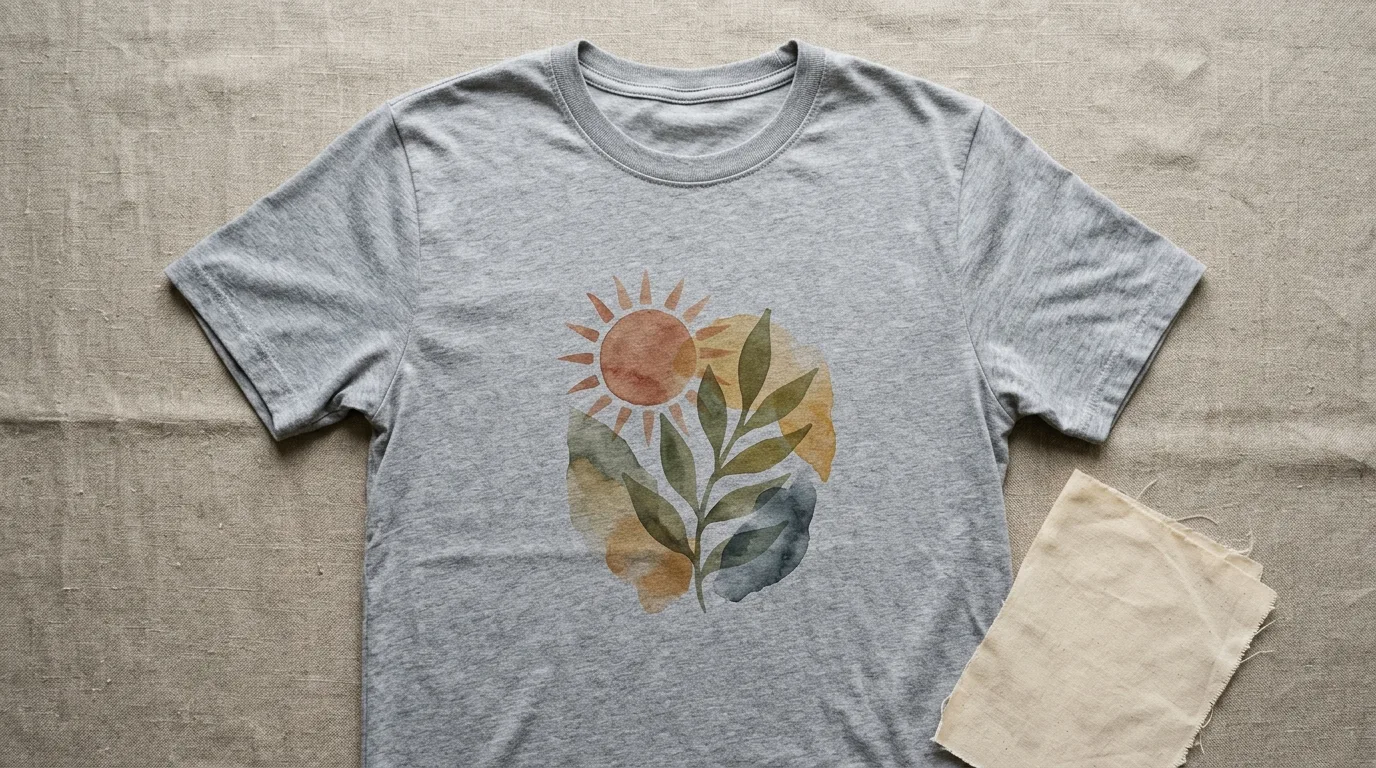
Toolbox POD keeps that decision simple. We print DTF on two short-sleeve crew-neck tees: the Gildan 64000 Softstyle and the garment-dyed Comfort Colors 1717. The Gildan is the everyday option. The Comfort Colors has a relaxed fit and a heavier, washed-in character. You can compare the fits, colors, and live size tables on our shirt page.
Do this
Choose the shirt first, then judge the design on its real color and fit. A bold logo on black and a soft illustration on ivory are different jobs.
Not this
Pick a print method because a forum called it the universal winner. The garment, art, quantity, and budget still decide the job.
What this means when you order from Toolbox POD
We use DTF for every shirt. That is a production choice, not a claim that DTG has no place. It means your art can be printed on either of our blanks without making you learn two workflows before you order one tee.
Toolbox POD print facts
| Method | DTF on every shirt |
| Minimum | One shirt |
| Classic tee | Gildan 64000, from $8.59 for S to XL, one printed side |
| Premium tee | Comfort Colors 1717, from $11.59 for S to XL, one printed side |
| Shipping | $5.95 per order |
Those are today's prices from our live pricing page. A second printed side adds $5.00 per shirt. The price page also shows why a flat per-order shipping fee matters more once several shirts go to one address.
Use the design to make the call
Start with the artwork, not the acronym. A large bright illustration with solid color blocks needs clean edges and enough contrast against the shirt. DTF is a practical fit for that kind of art. Small details, pale highlights, and a design that has to read on more than one shirt color also make a good case for DTF's transfer-first approach.
A soft tonal illustration on a cotton shirt is a different conversation. That is where people often prefer the feel associated with a direct garment print. But the difference is not a free pass for a bad file. A low-resolution upload stays low-resolution. Tiny type, muddy contrast, and an overstuffed design still look rough regardless of the print method.
Before you order
Check the art at the size it will print. Make sure the important shapes stay clear against the shirt color, then choose the blank that fits the person who will wear it.
It also helps to separate durability from care. A custom shirt gets rubbed, stretched, washed, dried, and worn in ways no product photo can predict. Follow the care directions that come with the shirt, and avoid treating any print method as a reason to ignore the garment itself.
For Toolbox POD orders, you do not need to choose between DTG and DTF. We make the DTF call in production, then you can focus on the useful decisions: Gildan or Comfort Colors, shirt color, size, front or back print, and whether the artwork holds up at the intended scale. If the design is still a rough idea, build it first, then come back to the shirt choice.
The print method should make ordering easier, not become a homework assignment before you make one shirt.
Toolbox POD
DTG vs DTF: common questions
Is DTF better than DTG?
Neither method wins every job. DTG is often valued for a soft result on cotton. DTF is useful when you need bright, detailed art across more shirt colors and fabric blends. Toolbox POD uses DTF for every order.
Does DTF feel different from DTG?
It can. DTG ink can feel very soft when it is printed directly into the right cotton shirt. A DTF print is a transferred layer, so it may feel more present on the fabric. The feel also changes with the size and coverage of the artwork.
Can I order one custom DTF shirt?
Yes. Toolbox POD has a one-shirt minimum. Choose the Gildan 64000 or Comfort Colors 1717, upload your artwork, pick a color and size, then order when it looks right.
Can I print on the front and back?
Yes. One printed side is included in the listed shirt price. Printing the back too adds $5.00 per shirt.
The bottom line
Choose DTG when a soft cotton-first print is the whole point. Choose DTF when you want flexibility across colors and blanks, with crisp full-color artwork. At Toolbox POD, DTF is the standard because it makes that second path straightforward from a single custom tee upward.
See your design on a shirt Pick your tee, upload the art, and order one or more when the details look right. |